ServicesReverse Mortgages
Reverse Mortgages in Tallapoosa, GA
A reverse mortgage lets borrowers 62 and older draw on the equity they've built without a monthly mortgage payment. We walk you through how it really works, what it costs and what it means for your family, so you can decide with clear eyes.
What a Reverse Mortgage Is and Who It Fits
Most reverse mortgages are Home Equity Conversion Mortgages, or HECMs, backed by the FHA. Instead of you paying the lender each month, the lender pays you from your equity, as a lump sum, monthly payments, a line of credit or a mix. The balance grows over time and is usually repaid when the last borrower sells, moves out for good or passes away.
It tends to fit retirees who plan to stay put, have solid equity and want steadier cash flow, to pay off an existing mortgage, cover medical costs or simply stop writing a mortgage check. It is not the right call for everyone. If you might move in a few years, or you want to leave the property free and clear to your children, we'll tell you so and look at other options like a home equity loan or HELOC or a standard mortgage refinance.
What We Handle for You
- An honest fit check
- We start with your age, equity, existing mortgage and plans. If the numbers or your goals point elsewhere, you hear that in the first conversation.
- Payout options side by side
- We compare a lump sum, monthly payments, a line of credit and combinations. Many borrowers like the line of credit because the unused portion can grow over time, and we show what that looks like in your case.
- Help with required HUD counseling
- Every HECM borrower must meet with an independent, HUD-approved counselor before applying. We explain why it exists, what they'll ask and help you get it scheduled.
- Taxes, coverage and upkeep explained
- With a reverse mortgage you still own the property, so property taxes, hazard insurance and upkeep stay on you. We go over what falling behind can trigger, and how a claim payout is usually handled when the loan servicer is listed on the policy, so a storm claim doesn't catch you off guard.
- Plain answers for your family
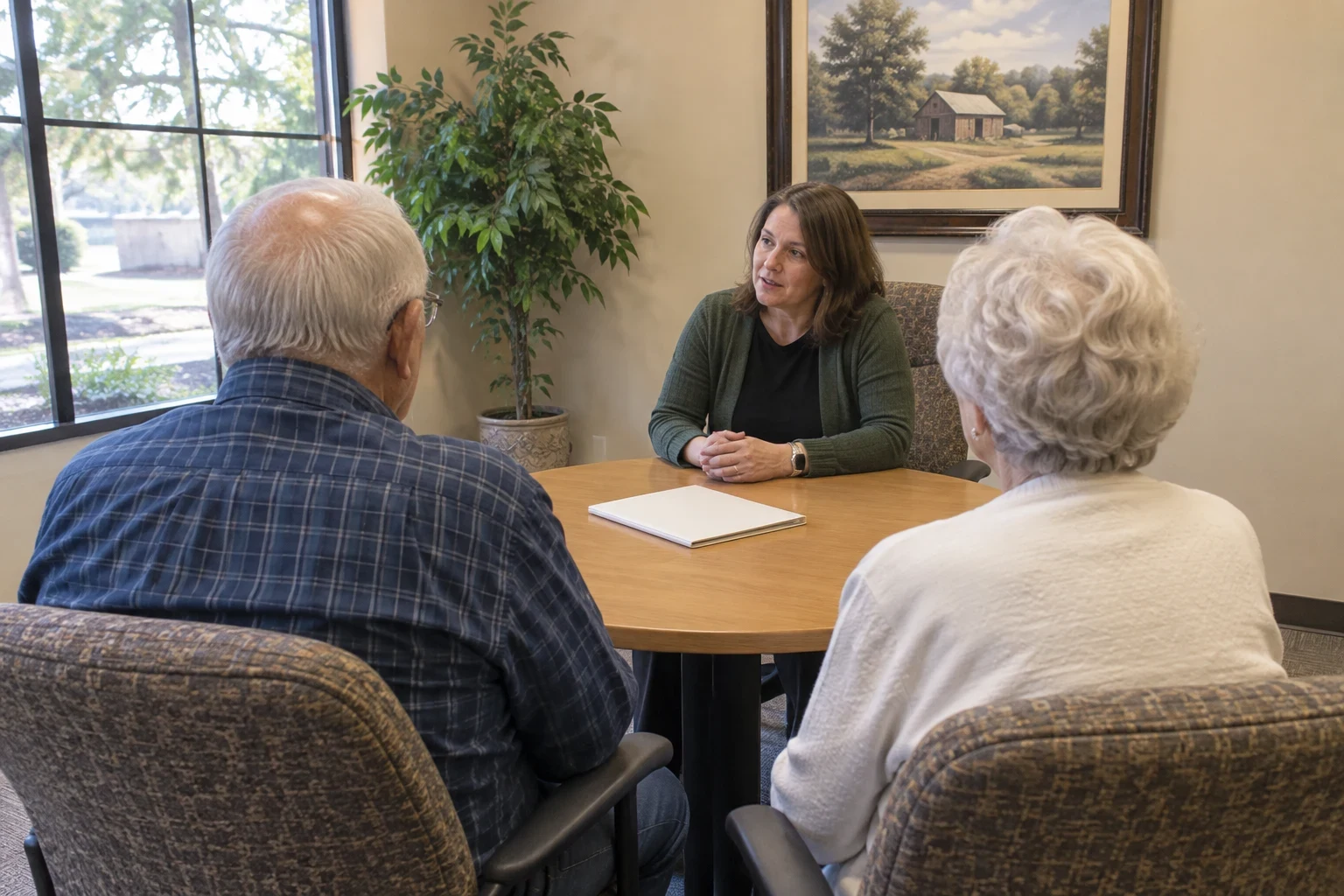
- Adult children often have questions. We're glad to include them on a call or video meeting and explain what happens to the loan and the property later.
Signs a Reverse Mortgage Is Worth a Look
Your mortgage payment strains a fixed income
If a monthly payment eats into Social Security or a pension, using a reverse mortgage to pay off that balance can free up real breathing room.
You have plenty of equity but little cash
Years of payments may have left you with a valuable property and a thin bank account. A reverse mortgage turns some of that value into usable funds without selling.
You plan to stay for the long haul
Upfront costs make more sense the longer you live there. If moving is likely soon, other loans usually cost less.
You want a financial cushion for later
A standby line of credit can help cover in-home care, medical bills or rising expenses, and it's there whether or not you ever draw on it.
How the Process Goes, Step by Step
- 1
Free consultation
We talk by phone, video or at our office. You tell us your goals, and we give rough estimates of what you could receive and what it would cost.
- 2
HUD counseling session
You meet with an independent counselor, by phone or in person. Afterward you get a certificate we need to move forward.
- 3
Application and appraisal
We gather your documents and order an FHA appraisal. The lender also reviews whether you can keep up with property taxes and coverage, which can affect how funds are set aside.
- 4
Closing and your choice of payout
You sign at closing and choose how funds arrive. There is a three-day right to cancel before anything is final, and we stay reachable afterward for questions.
What Shapes the Cost of a Reverse Mortgage
Reverse mortgages carry more upfront cost than many other loans, and we put every fee in writing before you commit. Much of it can be paid from the loan itself rather than out of pocket. Here's what moves the numbers.
- Property value and FHA limits
- Fees and the amount you can borrow are tied to the appraised value, capped at the FHA lending limit for the year.
- FHA mortgage premiums
- HECMs include an upfront FHA premium and an annual one charged on the balance. That premium is what protects you and your heirs from owing more than the property is worth.
- Age and interest rate
- The age of the youngest borrower and the current rate drive how much equity you can access. Older borrowers and lower rates generally mean more available funds.
- Existing mortgage balance
- Any current mortgage must be paid off at closing, which reduces what's left for you to draw.
- Origination and closing costs
- Expect standard items like title, recording and the appraisal, plus an origination fee. We itemize each one so nothing shows up unexplained.
Reverse Mortgage Questions We Hear Often
Something not covered here? (770) 659-7352
Could I lose the property with a reverse mortgage?
You keep the title. The loan can come due if you stop living there as your main residence, fall behind on property taxes or insurance, or let the property fall into poor condition. We go over these rules early so you know exactly what keeps the loan in good standing.
What happens for my heirs?
When the last borrower passes away, heirs can sell the property and keep any equity left after the loan is paid, or pay off the loan and keep it. With an FHA-backed HECM, they won't owe more than the property is worth, and they can generally pay the lesser of the balance or 95 percent of the appraised value to keep it.
What if my spouse is younger than 62?
A younger spouse can often be listed as an eligible non-borrowing spouse, which can let them stay after the borrower passes, as long as the loan terms are met. Their age does reduce the amount available, and we'll show you that tradeoff.
Will a reverse mortgage affect Social Security or Medicare?
Reverse mortgage proceeds are generally not treated as income, so Social Security and Medicare are typically unaffected. Needs-based benefits like Medicaid can be different, so we suggest checking with a benefits advisor before you draw large sums.
Can I use a reverse mortgage to buy a different place?
Yes. A HECM for Purchase lets you buy a new primary residence with a larger down payment and no monthly mortgage payment afterward. It's a common choice for retirees downsizing or moving closer to family.
Talk It Over With a Loan Officer First
Bring your questions, and your family if you like. We'll go through the numbers, the costs and the alternatives with no pressure to sign anything.